
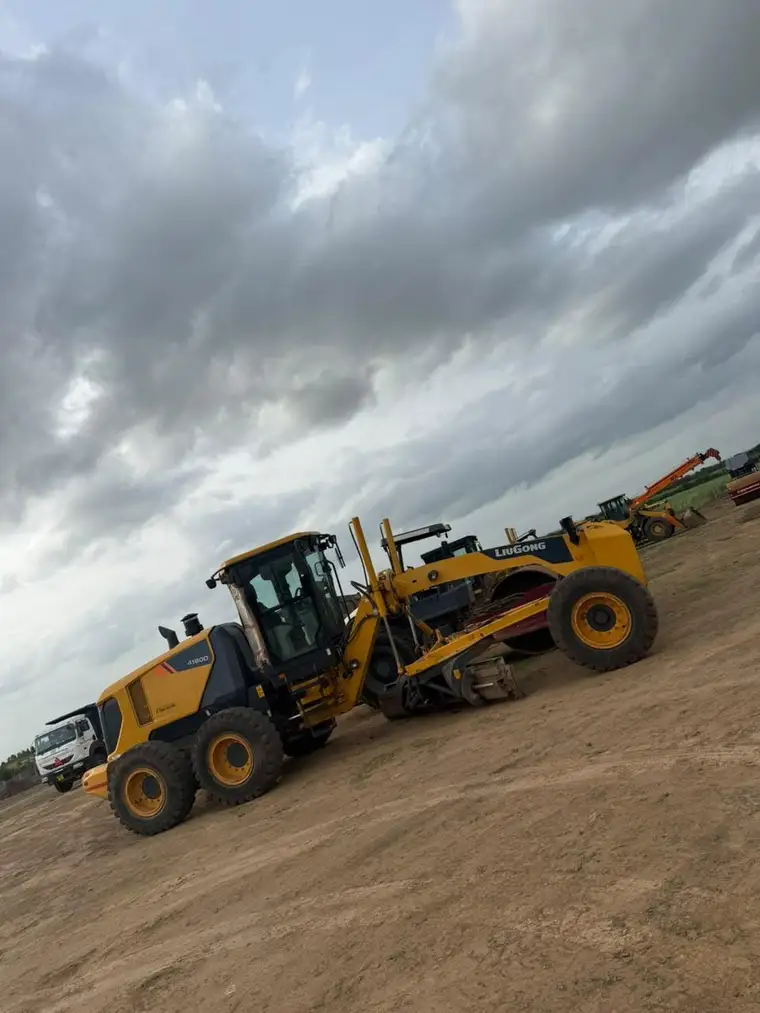
Wet mix macadam is the layer a flexible pavement leans on. Everything bituminous sits on it, so a soft patch or a segregated strip in the WMM comes back later as a rut or a crack in the surface, long after the layer was measured and paid for.
The specification is short. MoRTH Clause 406 gives WMM one grading table, one table of physical requirements and a few pages on how it is mixed, laid and rolled. The numbers below are from the Specifications for Road and Bridge Works, Fifth Revision. Check the edition your contract cites, because the fines limit in the WMM grading changed between revisions.
What WMM is and where it sits
WMM stands for wet mix macadam: clean, crushed, graded aggregate and granular material, premixed with water and compacted to a dense mass. On most highway sections it is the base course, laid on the granular sub-base and directly under the dense bituminous macadam. The clause is titled sub-base/base, so a design can also call for it lower down.
Its job is structural. GSB spreads load and drains. WMM carries load. That is why the clause insists on crushed stone, a shape limit and plant mixing, none of which it asks of the sub-base. The two are set side by side in GSB vs WMM.
WMM grading as per MoRTH Table 400-13
Figures are per cent passing by weight. There is one envelope, not six.
| IS sieve | Per cent passing |
|---|---|
| 53.00 mm | 100 |
| 45.00 mm | 95–100 |
| 26.50 mm | – |
| 22.40 mm | 60–80 |
| 11.20 mm | 40–60 |
| 4.75 mm | 25–40 |
| 2.36 mm | 15–30 |
| 600 micron | 8–22 |
| 75 micron | 0–5 |
Fifth Revision. The table lists the 26.5 mm sieve but sets no limit on it. Contracts let on the Fourth Revision carry this table as 400-11 with 0 to 8 per cent passing 75 microns, and IRC:109-2015 uses different limits on the two finest sieves, so quote the document your contract names.
Two sentences under the table matter as much as the table. Material finer than 425 microns must have a plasticity index of 6 or less. And the approved gradation has to run evenly from coarse to fine: it may not swing from the low limit on one sieve to the high limit on the next. A blend sitting at the bottom of the 22.4 mm band and the top of the 11.2 mm band is inside every limit and still not acceptable.
The envelope is normally hit by blending fractions, not with one crusher-run product. The MoRTH Standard Data Book's own analysis of the item assumes three: 45 to 22.4 mm at 30 per cent, 22.4 to 2.36 mm at 40 per cent, and 2.36 mm to 75 micron at 30 per cent. A job mix is fixed by trial on the actual stone, but that split is a fair place to start setting bin feeders.
The physical requirements in Table 400-12
Coarse aggregate has to be crushed stone. Crushed gravel or shingle is allowed only if at least 90 per cent by weight of the pieces retained on the 4.75 mm sieve have two or more fractured faces.
| Property | Test | Limit |
|---|---|---|
| Los Angeles abrasion value | IS 2386 Part 4 | 40 per cent maximum |
| or aggregate impact value | IS 2386 Part 4, or IS 5640 | 30 per cent maximum |
| Combined flakiness and elongation index | IS 2386 Part 1 | 35 per cent maximum |
| Plasticity index of the fraction passing 425 micron | IS 2720 Part 5 | 6 maximum |
| Soundness | IS 2386 Part 5 | Tested only if water absorption is above 2 per cent |
Either the abrasion value or the impact value has to pass, not both. Clause 406 triggers the soundness test but prints no loss limit; IRC:109-2015 and MoRTH's own bituminous tables use 12 per cent with sodium sulphate.
The combined index is not two separate tests added together. The flaky pieces are taken out of the sample first, and elongation is measured only on what is left; the two percentages are then summed. How that is done, and what a crusher has to do to pass it, is in flakiness and elongation index. The limits for every other layer are in aggregate tests and their MoRTH limits.
Mixing: a pugmill, and water at OMC
WMM is not mixed on the road. Clause 406.3.3 requires an approved mixing plant with controlled addition of water and forced mixing, such as a pugmill or the pan mixer of a concrete batching plant. The clause lists what the plant must have: three or four bin feeders on variable speed motors, a vibrating screen to take out oversize, a controlled water system, the mixer and a central control panel.
Water brings the mix to optimum moisture content, found by the heavy compaction test of IS 2720 Part 8. Because the mould cannot take the coarsest stone, the fraction retained on 22.4 mm is replaced with 4.75 to 22.4 mm material before the test is run. The plant adds a little over OMC to cover evaporation on the haul. By the time the roller is on it, the moisture has to be within the limits agreed with the Engineer.
Laying and WMM compaction
- 01
Spread by paver
The mix goes down immediately after mixing, through a self-propelled paver finisher with a tamping and vibrating screed and automatic level control. A motor grader is allowed only in exceptional cases, with the Engineer's prior approval. Tipping in heaps on the area being laid is ruled out, and so is hauling over a partly completed stretch.
- 02
Hold the layer thickness
A single compacted layer may not be less than 75 mm. With vibratory compaction and the Engineer's approval it can go up to 200 mm. Anything thicker is two layers.
- 03
Roll to 98 per cent
Up to 100 mm compacted, a smooth wheeled roller of 80 to 100 kN is enough. Up to 200 mm needs a vibratory roller of at least that static weight. Speed stays under 5 km/h, rolling runs from the low edge to the high edge, and each pass overlaps the last by a third. The target is at least 98 per cent of maximum dry density by IS 2720 Part 8.
- 04
Let it dry
The finished layer is left to dry for 24 hours. No traffic runs on it except construction equipment the Engineer has allowed.
Section 900 sets how often the layer is checked: a grading and a plasticity test for every 200 m³ of aggregate, the combined shape index every 500 m³, the impact value every 1,000 m³, and one set of three density tests for every 1,000 m² of compacted layer.
Why WMM fails on site
- Segregation. The coarse fraction rolls to the toe of a stockpile, to the tail of a tipper body and to the outer ends of a paver's auger. A strip of open stone at the edge of the mat is not caught by a density test taken two metres away, and it is still the weak strip once the DBM is on it. The clause wants no segregation and no pockets of fines, and it means at the point of laying.
- Flaky stone. A cone run starved, or on a worn liner, produces slabs. They pass every sieve and then break under the roller, which shifts the grading finer after it was tested.
- Fines. Five per cent passing 75 microns is easy to exceed when crusher dust is the whole fine fraction, and dust from a dirty face brings plastic fines that fail the PI of 6 as well.
- Moisture. Too dry and the mix will not close under the drum. Too wet and it shoves ahead of the roller and leaves a laminated surface. An open tipper on a long lead in May loses water faster than the plant operator allowed for, so cover the load.
- Delay between mixing and rolling. The clause says spread immediately. A load that waits at the paver dries on top and segregates in the body, and a hose at the hopper does not remix it.
Most of this is decided before the pugmill. Decks that hold their cut and samples pulled through the shift keep each fraction steady, and steady fractions are what make a blend repeatable. That is how our crushing crews run a plant, because a grading that has drifted costs an hour to correct in a stockpile and a layer to correct under a paver.
What goes on top: the prime coat
WMM is porous and dusty, and a bituminous layer will not bond to it as laid. After the drying period it gets a prime coat under Clause 502: cationic bitumen emulsion of SS1 grade to IS 8887, sprayed at 0.7 to 1.0 kg/m² on WMM so that it soaks 8 to 10 mm into the surface. The primed surface cures for at least 24 hours before the tack coat and the first bituminous layer.
Working out tonnes and asking for a rate
WMM is measured for payment in cubic metres of finished work and bought in tonnes. The MoRTH Standard Data Book takes compacted WMM at 2.2 tonnes per cubic metre. Hard, dense rock tests higher, and 2.3 is a fair planning figure until your own lab report gives a maximum dry density.
Volume = 1,000 m × 10 m × 0.25 m = 2,500 m³
Tonnage = 2,500 m³ × 2.30 t/m³ = 5,750 t
Tippers = 5,750 t ÷ 20 t a load = 288 loads
About 5,750 tonnes a kilometre, before wastage
The thickness is for arithmetic; yours is on the drawing. A full four-lane section is worked through in how much aggregate a kilometre of highway needs.
For a rate, send the clause and edition the contract cites, the monthly quantity, the chainage or nearest town, and when the base course starts. Say whether you want blended WMM or the separate fractions for your own wet mix plant, because blended material has to reach the paver before it dries and that limits the lead. We supply WMM to Clause 406 from our own plants and from plants we run on client sites, delivered and weighed. Rates and lead distances start on the aggregate supply page.